Supply Chain
The Hidden Costs of Custom Bag Procurement: A Supply Chain Reality Check
An internal look at where bulk orders actually go wrong—from GSM variances to freight forwarding surprises in the New Zealand market.
Published · By David Ross
In the world of promotional merchandise, the gap between a digital mockup and a physical delivery is often paved with assumptions. As someone who has overseen hundreds of bulk production runs for New Zealand corporates, I've learned that the "per unit price" is rarely the final cost. This isn't about upselling; it's about understanding the mechanical and logistical realities that dictate whether a project lands on time or gets stuck in customs.
This document outlines the operational friction points we frequently encounter. It is intended for procurement managers who need to justify budget allocations or understand why we might push back on a specific deadline or material request.
The GSM Trap: Why "Standard" Cotton Doesn't Exist
One of the most common friction points in procurement is the specification of fabric weight. You might request a "standard cotton tote," but in manufacturing terms, "standard" is a variable, not a constant.
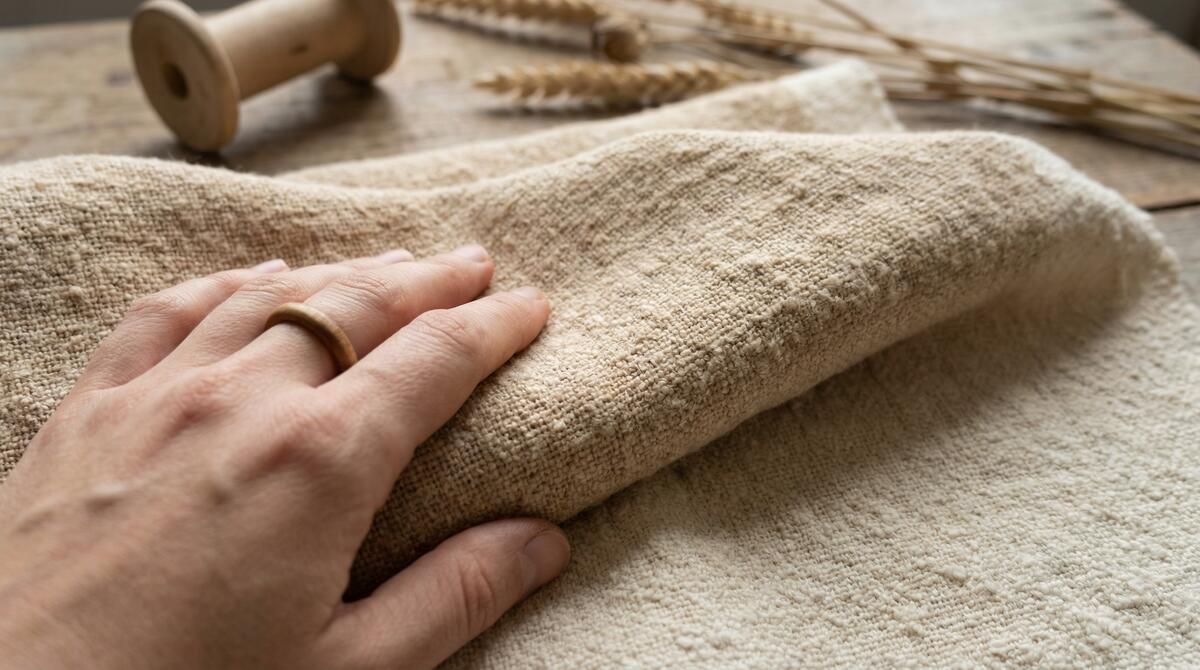
Cotton thickness is measured in GSM (Grams per Square Meter) or ounces. A 140gsm bag from Factory A can feel vastly different from a 140gsm bag from Factory B. Why? Because the density of the weave and the quality of the raw cotton fiber play a massive role. A loose weave with thicker threads might meet the weight requirement but will feel rough and cheap. Conversely, a tight weave with finer threads feels premium but might be thinner.
The "Starching" Deception: A critical variable often overlooked is the use of starch. Some manufacturers will heavily starch a lower-grade, 120gsm fabric to make it feel like a robust 150gsm canvas. This feels crisp and high-quality when you hold the pre-production sample in your office. However, after the end-user washes the bag once, the starch dissolves, and the bag becomes limp and shapeless. We specifically audit our partner mills to ensure the "hand feel" comes from fiber density, not temporary chemical stiffeners.
The Reality Check: If you are ordering based solely on a spreadsheet number, you are gambling. We often see "budget" 110gsm bags that are practically see-through under office lighting. For a corporate environment, we generally advise against anything under 135gsm unless it is strictly for a single-use event. The perceived value drop-off below this threshold is significant.
Why does my sample look different from the mass production run?
This is the question every procurement officer asks eventually. The honest answer is batch variance. Fabric is dyed in massive lots. If your sample came from Lot 402 and your production run comes from Lot 405, there can be a 5-10% shift in color shade or texture. This is inherent to textile manufacturing, especially with natural fibers like cotton and jute. While we enforce strict QC tolerances, expecting a molecular-level clone of a pre-production sample is often unrealistic for promotional grade textiles.
Print Feasibility vs. Design Ambition
We love ambitious branding, but ink has physical limitations. A common scenario involves a marketing team designing a complex, multi-gradient logo with fine text, intended for a rough jute surface.
Screen Printing: This is the industry workhorse for a reason—it's durable and cost-effective. However, it requires a vector image and distinct colors. It cannot handle gradients. If your logo fades from navy to teal, screen printing is physically impossible without converting it to a halftone (dots), which often looks grainy on coarse fabrics.
Digital Transfer: This allows for full-color photo-realistic prints. The trade-off? It sits on top of the fabric like a sticker, rather than soaking in. On a flexible canvas bag, a large digital transfer can feel stiff and "plastic-like." Over time, with repeated folding and washing, these large transfers are more prone to cracking than a screen print.
The Trade-off: If you need a massive, full-color photographic print on a tote bag, you must accept that the hand-feel will be compromised. If you prioritize a soft, premium feel, you must simplify your artwork to 1-3 solid colors.
Manual screen printing setup showing the need for distinct color separation screens.
The Logistics of "Landed" Costs in New Zealand
New Zealand's geographic isolation is a procurement reality we cannot ignore. When we quote a "landed price," it includes a complex web of freight forwarding, currency fluctuation, and customs clearance.
Air vs. Sea: This is the single biggest lever in your budget. Air freight is fast (7-10 days) but can cost more than the bags themselves. Sea freight is economical but requires a 5-8 week lead time. The "hidden cost" here is the delay risk. A storm in the Pacific or a congestion issue at the Ports of Auckland can add 2 weeks to a sea shipment instantly. There is no "expediting" a container once it is on the water.
The "Urgent" Surcharge: We often receive requests to "just speed it up." Speed costs money—specifically, air freight money. If a project deadline is immovable (like a conference date), and the timeline is tight, we are forced to use air freight, which can double the unit cost. Planning 3 months ahead is the most effective way to slash your procurement spend.
Biosecurity and The MPI Factor
For New Zealand importers, the Ministry for Primary Industries (MPI) is a stakeholder in every shipment, particularly when natural fibers like Jute or Hessian are involved. These plant-based materials are potential carriers for pests like the Khapra Beetle, which poses a significant threat to our agricultural sector.
Fumigation Requirements: Unlike synthetic polyester, natural jute often requires mandatory fumigation certificates before it can clear the border. If a supplier in Bangladesh or India cuts corners on this documentation, or uses a fumigation method not recognized by NZ standards, the entire container can be held at the port. We have seen competitors' shipments flagged for "re-fumigation" upon arrival in Auckland, a process that not only costs thousands of dollars but adds 7-14 days to the delivery timeline. This is a classic example of where a "cheaper" offshore quote becomes exponentially more expensive due to non-compliance.
Moisture Control in Transit: Shipping across the equator introduces another variable: "Container Rain." As a steel container moves from the humid tropics of Southeast Asia to the cooler waters of the Tasman Sea, condensation forms on the ceiling and drips down onto the cargo. If the bags are packed in standard cardboard without desiccant silica gel packs or moisture-barrier liners, you risk opening a shipment of moldy, unusable product. We mandate specific packing protocols—including individual poly-bagging (or biodegradable alternatives) and industrial desiccants—to mitigate this risk, even though it adds a few cents to the unit cost.
When Things Go Wrong: The Uncomfortable Truths
Despite rigorous QC, things happen. A carton gets crushed in transit. A humidity spike in a warehouse causes organic cotton to smell musty. A specific pantone color looks different under fluorescent warehouse lights compared to natural sunlight.
Our Approach: We don't promise perfection; we promise accountability. We build a "wastage allowance" into our raw material orders so that if 2% of the bags have stitching errors, we can discard them before they ever reach you. However, for custom orders, we always advise clients to order 5% more than their absolute minimum requirement. If you need exactly 500 bags for 500 delegates, ordering exactly 500 is a risk strategy we do not recommend.
Procurement is a balancing act between the ideal and the real. By understanding these material and logistical constraints, we can work together to build a specification that is not just beautiful on a screen, but deliverable to your dock.
For further reading on material specifics, see our comparison of cotton, canvas, jute, rPET and non-woven bags.