Supply Chain
Why Material Procurement Determines Your Custom Canvas Bag Delivery Date More Than Production Speed
Learn why fabric sourcing and material availability—not factory production capacity—often control when your custom canvas bags actually ship.
Published · By David Ross
When procurement teams evaluate quotes for custom canvas bags, the conversation almost always centres on production capacity. How many units can the factory produce per week? What is their current backlog? These are reasonable questions, but they often miss the variable that actually determines when the order ships: material procurement.
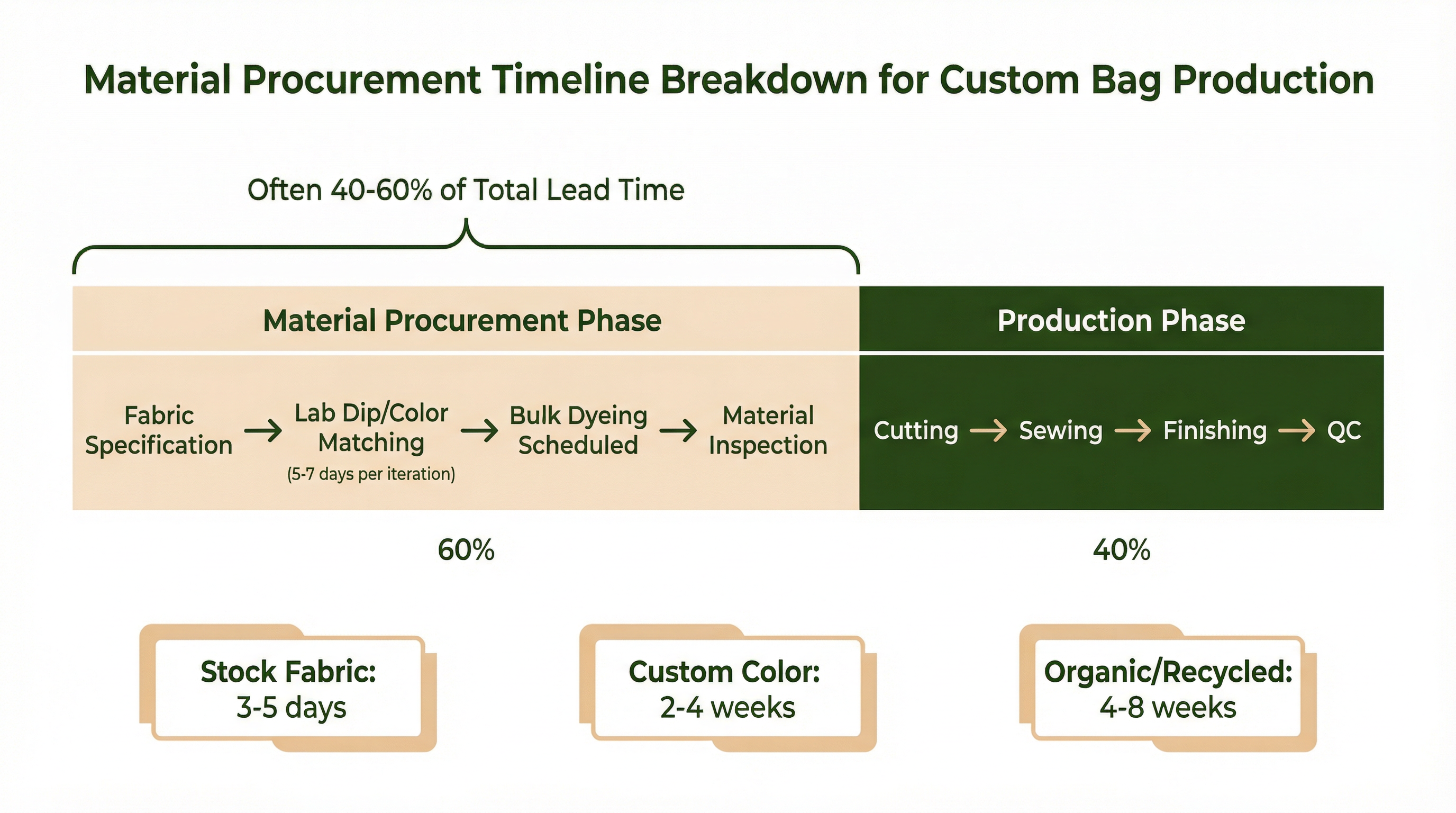
In practice, this is where lead time estimates begin to diverge from reality. A factory might quote four weeks for production, and that figure may be entirely accurate for the cutting, sewing, and finishing stages. What the quote rarely makes explicit is that those four weeks cannot begin until all materials are on the factory floor, inspected, and approved. For standard specifications using stock fabrics, this might add only a few days. For anything requiring custom development—specific fabric weights, particular colour matches, organic certifications, or recycled content—the material procurement phase can easily exceed the production phase itself.
The mechanics of fabric sourcing operate on timelines that most buyers never see. When a custom canvas bag requires a specific colour that is not held in mill inventory, the fabric must be dyed to order. This is not a simple process. The mill first produces a lab dip—a small sample of the dyed fabric—which must be approved before bulk dyeing begins. If the colour does not match expectations, the lab dip process repeats. Each iteration typically requires five to seven working days, and it is not unusual for colour matching to require two or three attempts before approval. Only after lab dip approval can the mill schedule the bulk dyeing run, which itself requires booking time on production equipment that serves multiple customers.
For buyers specifying organic cotton or recycled materials, the procurement timeline extends further. These specialty materials are not held in the same inventory depths as conventional fabrics. Mills produce them in smaller batches, and availability fluctuates with certification cycles and raw material supply. A request for GOTS-certified organic cotton canvas in a specific weight and colour might face a six to eight week procurement window simply because the certified material is not currently in production. The factory has no control over this timeline—they are waiting on the same supply chain as everyone else.
What compounds this challenge is the concept of material hold periods. When a factory quotes a project, they often place a tentative hold on available fabric inventory. This hold is not indefinite. Mills typically maintain holds for thirty to forty-five days, after which the material may be released to other buyers. If the buyer's approval process—whether for samples, artwork, or internal sign-off—extends beyond this hold period, the factory may need to re-source the material. This does not simply add time; it potentially restarts the entire procurement cycle, including any custom dyeing requirements.
The practical implication is that specification changes late in the approval process carry timeline costs that far exceed the apparent scope of the change. Switching from a standard navy to a custom brand colour might seem like a minor adjustment, but it can add three to four weeks to the delivery date. Upgrading from conventional cotton to recycled content might align with sustainability goals, but it requires understanding that the material itself may need to be manufactured before the bag production can begin.
For teams managing production timelines for custom bags, the most effective approach is to treat material procurement as the critical path rather than an assumed constant. This means finalising fabric specifications before requesting production quotes, understanding which materials are stock versus made-to-order, and building realistic buffers for any custom colour or specialty material requirements. The factory's production capacity matters, but only after the materials arrive. Until then, the delivery date remains a function of supply chain variables that no amount of production efficiency can accelerate.