Insights
Why Print Position Tolerance for Custom Bags Needs Written Agreement Before Production Begins
The logo placement on a custom bag appears straightforward—centred on the front panel, a specific distance from the top edge. Yet without explicit tolerance parameters documented in writing, this seemingly simple specification becomes the source of disputes that neither party anticipated.
Published · By KiwiBag Works Team
There is a quality control conversation that occurs after nearly every bulk shipment of custom bags, and it follows a predictable pattern. The client examines the delivered bags, notices that logo positions vary slightly from bag to bag, and questions whether the production meets acceptable standards. The factory responds that all bags fall within normal manufacturing tolerances. Both parties are correct, yet both are frustrated. The problem is not production quality—it is the absence of documented agreement about what "acceptable" actually means.
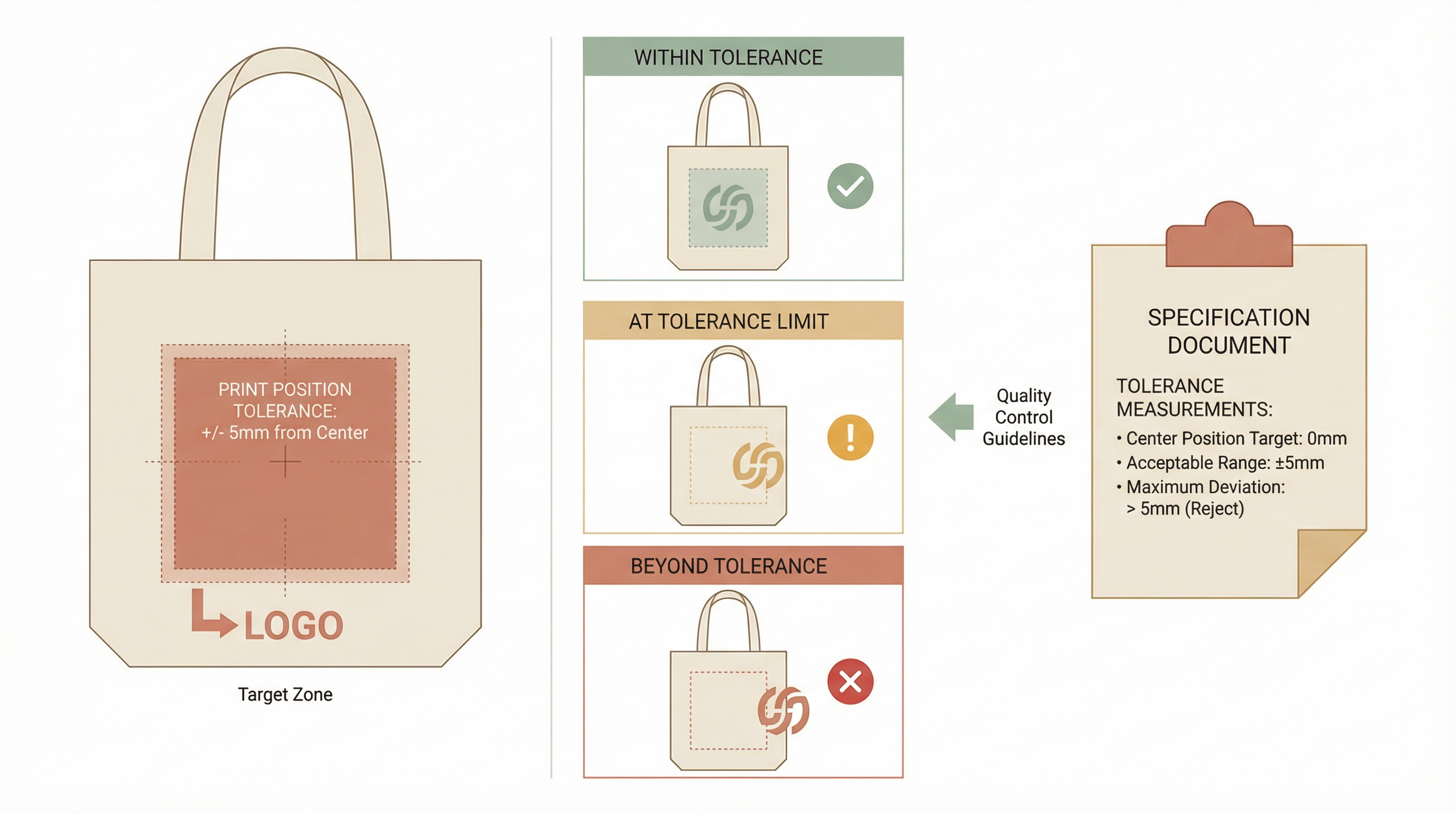
From a quality assurance perspective, perfect consistency in print position is a physical impossibility in textile manufacturing. Unlike paper printing, where sheets feed through machines with mechanical precision, fabric printing involves materials that stretch, shift, and respond to environmental conditions. A cotton canvas tote bag is not a rigid substrate—it moves during handling, responds to humidity changes, and behaves differently depending on how it was stored before printing. Even the most sophisticated printing equipment cannot eliminate all variation when working with inherently variable materials.
The industry standard for print position tolerance on custom bags typically falls within ±5mm to ±10mm from the specified placement point. This means a logo specified as "centred, 50mm from top edge" might actually appear anywhere from 45mm to 55mm from the top edge, and anywhere within a 10mm horizontal range of true centre. On a large tote bag, this variation is visually imperceptible. On a smaller promotional pouch, the same millimetre deviation becomes noticeable. The tolerance that is "normal" for the factory may be "unacceptable" to the client, depending on the product size and the client's expectations.
What makes this particularly problematic is the timing of when tolerance becomes relevant. During the sample approval stage, the client typically receives one or two samples that represent the best production outcome—carefully made, individually inspected, likely selected from a small batch specifically because they exemplify ideal placement. These samples establish an expectation of precision that bulk production cannot consistently replicate. The sample shows what is possible; bulk production shows what is probable across thousands of units with normal manufacturing variation.
The customization workflow rarely includes explicit tolerance discussion because both parties assume shared understanding. The client assumes that bulk production will match the sample. The factory assumes the client understands that samples represent optimal outcomes, not guaranteed minimums. Neither assumption is communicated, and neither party realises the gap until bags are delivered and inspected.
In practice, this is where quality disputes become genuinely difficult to resolve. The client points to the approved sample and says the delivered bags do not match. The factory points to industry standards and says all bags fall within acceptable tolerance. Both are technically correct. Without a written tolerance specification that both parties agreed to before production, there is no objective standard against which to measure the dispute. The conversation becomes about expectations and assumptions rather than documented requirements.
The financial implications extend beyond the immediate shipment. If the client rejects bags that fall within normal manufacturing tolerance, they bear the cost of goods they cannot use. If the factory accepts a return of bags that met industry standards, they absorb a loss for production that was technically compliant. If both parties compromise on a partial refund, neither is satisfied and the relationship is damaged. The cost of a tolerance conversation that should have taken fifteen minutes during project planning now manifests as thousands of dollars in disputed goods and hours of negotiation.
For New Zealand businesses ordering custom bags, the tolerance question deserves explicit attention during the specification stage. Before artwork is finalised, the question should be asked: what print position variation is acceptable for this project? The answer depends on the product type, the logo size relative to the bag, and how the bags will be used. Conference giveaways viewed from a distance have different tolerance requirements than retail packaging examined up close. Corporate gifts for executives demand tighter tolerances than promotional items for mass distribution.
The specification document should include explicit tolerance parameters: "Logo placement: centred horizontally ±3mm, 50mm from top edge ±5mm." This language removes ambiguity. The factory knows exactly what standard they must meet. The client knows exactly what variation to expect. Quality control becomes a matter of measurement against documented specifications rather than subjective assessment against remembered samples.
Factories that consistently deliver to client expectations are not necessarily using superior equipment. They are working with clients who communicate tolerance requirements explicitly, in writing, before production begins. The fifteen-minute conversation about acceptable variation prevents the fifteen-hour dispute about whether delivered goods meet undefined standards. For procurement professionals, adding tolerance specifications to the standard requirements checklist is one of the highest-return investments in project documentation—a small addition to the specification process that eliminates an entire category of post-delivery disputes.